

I had never been stopped so often by someone wanting to look at my camera. With the Nikon Zf it happened regularly: enthusiasts, photographers, simple curious passers-by drawn in by that unmistakable design that turns heads even among people who know nothing about photography. It was the first sign that this camera was something different. After testing it thoroughly in very different contexts — events, reportage, weddings, casual outings with no plan — I can say with conviction that the Zf isn’t just beautiful to look at: it’s one of the most complete and convincing cameras in the entire Z lineup.
A design that tells a story
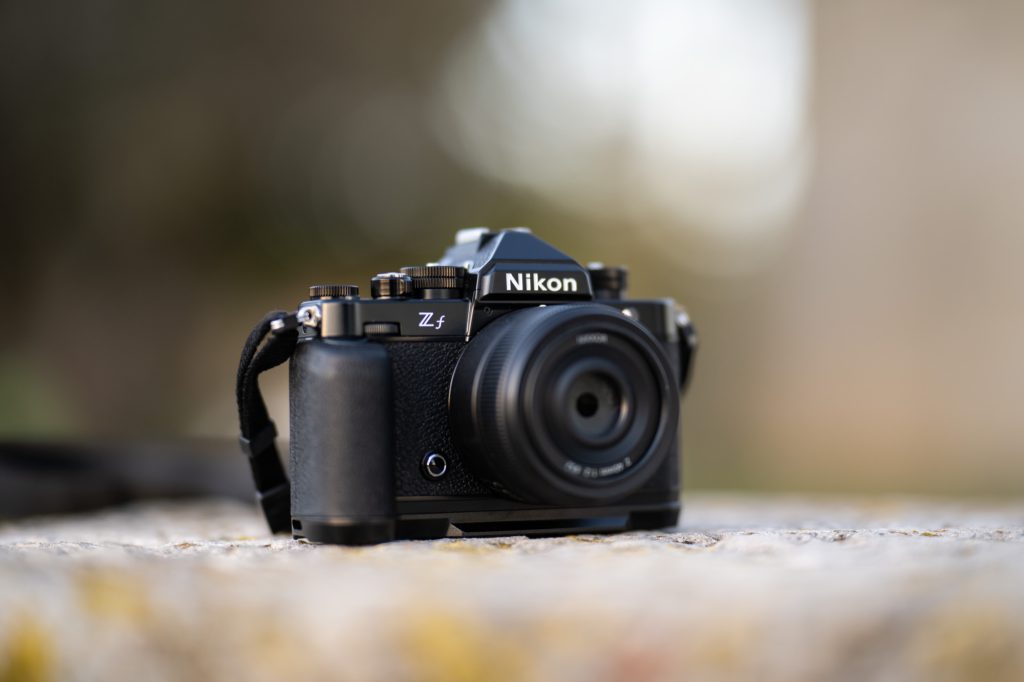
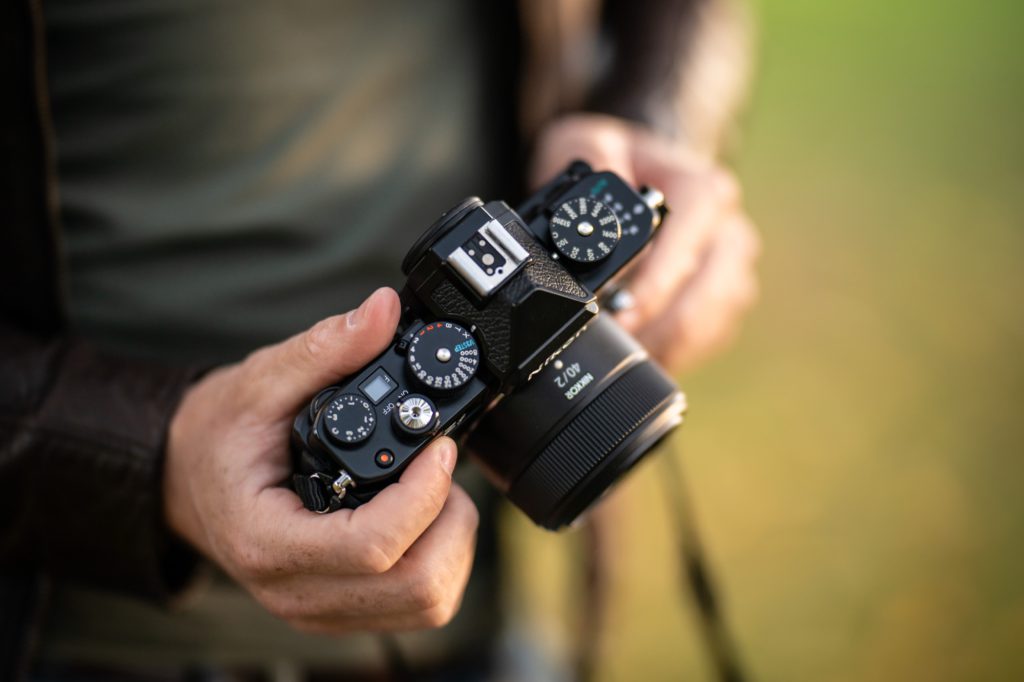
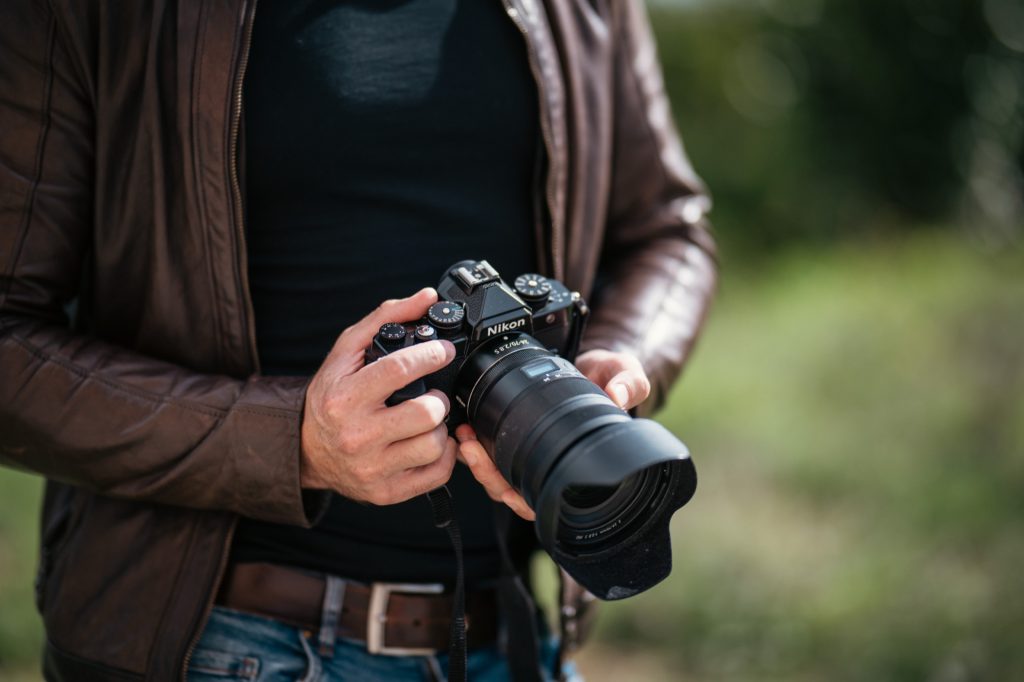
The first thing that strikes you is, of course, the design. The Zf openly draws inspiration from the Nikon FM2, the legendary 35mm film SLR that defined an entire era of photography. The mechanical dials on the top plate, the matte finish, the engraved logo, the brass controls: every detail is designed to evoke that tactile, visual feeling familiar to anyone who has shot on film. But the Zf isn’t a nostalgic marketing exercise — it’s a real, modern, capable camera.
It’s worth saying a word about those dials — ISO, shutter speed, exposure compensation — that dominate the top plate. For those coming from film, or who love a manual, deliberate approach to photography, they’re a gift: physical, precise, immediate. In my day-to-day work, though, I ended up using them sparingly: the customizable function buttons let me manage all settings just as quickly straight from the screen, in a workflow that better suits the pace of certain situations. The dials stay right there, beautiful as ever, and anyone who wants to use them will find them exactly where expected. That flexibility is, ultimately, one of the Zf’s real strengths.
The color options are an added pleasure: besides classic black, Nikon offers the Zf in several finishes — indigo blue, sepia brown, bordeaux red, moss green, stone gray and the newer silver version — each with its own personality. You pick your favorite at the time of purchase, and the result is a camera with a strong aesthetic character built right in.
Small in size, big on performance
At 144 × 103 × 49 mm and 710 grams (with battery and card), the Zf is surprisingly portable for a full-frame camera. The most telling comparison is with the Z8 — a higher-tier camera aimed at the most demanding professionals — which measures 144 × 118.5 × 83 mm and weighs 910 grams. At the same width, the Zf is over 3 centimeters thinner and 200 grams lighter: differences you genuinely feel after hours of shooting.
A matter of feel
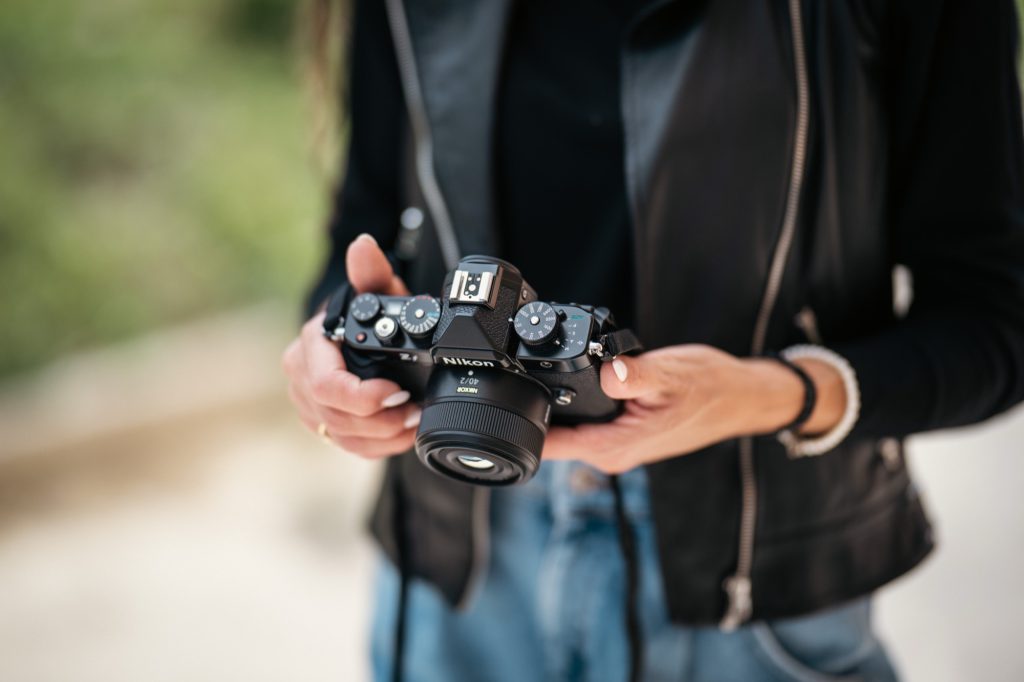
Without a cage, the Zf delivers a unique feeling: holding it is almost identical to holding an old film Nikon FM2. The flat body, the dials, the absence of a pronounced grip — it all brings back that experience. It’s a beautiful, purist feeling that longtime photographers will appreciate instantly.
With a cage, on the other hand, things change radically: the grip becomes solid, secure, professional. For anyone working long hours outdoors or handling intense sessions, pairing it with a cage is the natural solution to get the best of both worlds.
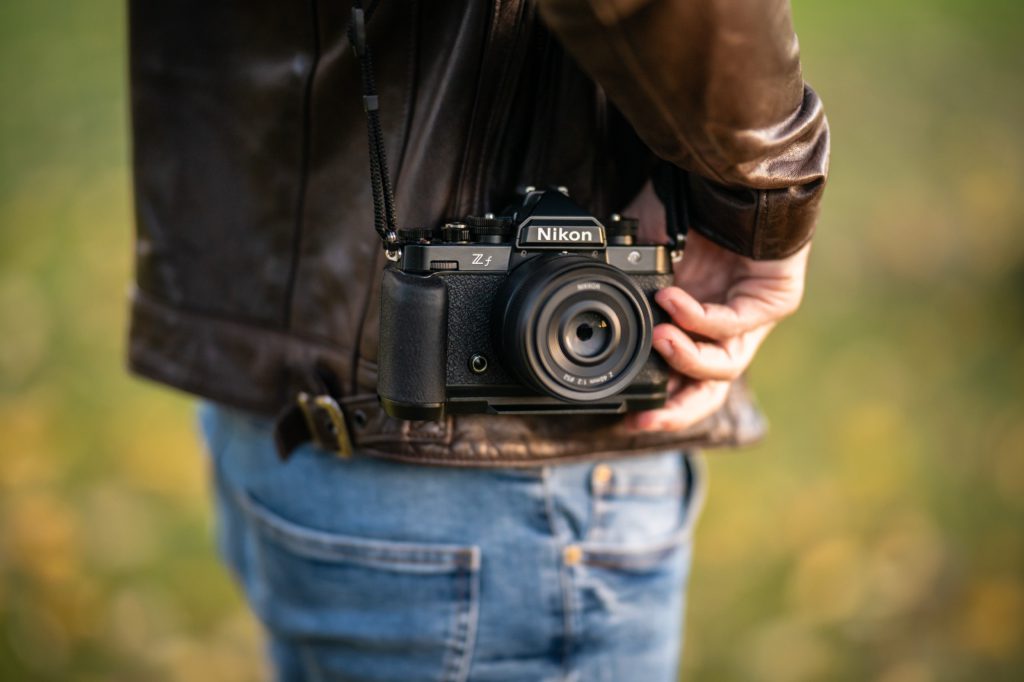
Image performance: no compromises
Beneath the vintage body beats a latest-generation technological heart. The 24.5 MP full-frame BSI-CMOS sensor is paired with the EXPEED 7 processor — the same one found in the Z8 and Z9, Nikon’s flagship workhorses. The result is excellent image quality: fine detail, wide dynamic range, and noise handled impeccably even at high ISO values.
Color rendition is one of the strengths you notice immediately in the field. The files — both JPEG and NEF — deliver natural, rich colors, with that characteristic Nikon color signature its users know and look for. Auto white balance does its job reliably even in mixed or difficult lighting.
The built-in 5-axis stabilization reaches up to 8 stops of compensation: an excellent figure, letting you shoot handheld in extremely challenging light without sacrificing sharpness.
Autofocus: fast, precise, smart
The Zf’s autofocus system is the same one found in the high-end cameras of the Z series: 273 phase-detection AF points, covering 90% of the frame. Subject recognition — people, animals, vehicles — works reliably, and tracking follows movement naturally even in complex scenes.
On this front, the Zf is essentially on par with the Z6 III: same number of AF points, same EXPEED 7 processor, same benchmark 24.5 MP image quality. The Z6 III brings a partially stacked sensor that gives it an edge in extreme speed situations, but for the vast majority of uses — weddings, portraits, reportage, travel — the two cameras are on the same level. The Zf, though, does it in a body that’s a completely different story.
It adapts to you, not the other way around
One of the Zf’s rarest qualities is its ability to change character depending on how you want to use it. Paired with Nikon Z’s pancake lenses — thin, light, essential — it becomes an extraordinarily compact kit: easy to carry anywhere, discreet, almost invisible. It’s the ideal setup for anyone who wants maximum quality without the weight and bulk of a traditional system. I personally use it often with the Nikkor Z 40mm f/2, a natural, versatile focal length that suits the Zf’s character perfectly in every situation: weddings, travel, street photography, outings with no fixed plan.
But the Zf isn’t a camera built for forced minimalism. Mounting larger, faster lenses, perhaps with the addition of a cage, turns it into a fully professional tool: the grip becomes solid, ergonomics improve, and the system expands without losing anything that makes it special. Two souls, one camera.
Spec sheet at a glance
- Sensor: 24.5 MP full-frame BSI-CMOS
- Processor: EXPEED 7 (same as the Z8 and Z9)
- Autofocus: 273 phase-detection points, subject recognition
- Stabilization: 5-axis, up to 8 stops
- Dimensions and weight: 144 × 103 × 49 mm, 710 g with battery and card
- Colors: black, indigo blue, sepia brown, bordeaux red, moss green, stone gray, silver
The verdict
The Nikon Zf is a camera that knows exactly what it wants to be. It doesn’t aspire to be the Z8 — which, with its 45.7 MP and stacked sensor, lives in another category — nor does it merely chase the Z6 III on raw performance: on that ground it holds its own, while adding something the Z6 III can’t offer — a strong aesthetic identity, in a compact body that’s a genuine pleasure to carry every day.
It’s the right camera for anyone who doesn’t want to compromise on quality, but also doesn’t want to give up the physical and visual pleasure of shooting. For those who love photography not just as technique, but as experience.
Once you’ve held it, it’s hard not to fall for it.